
 Quick view











Ludwig
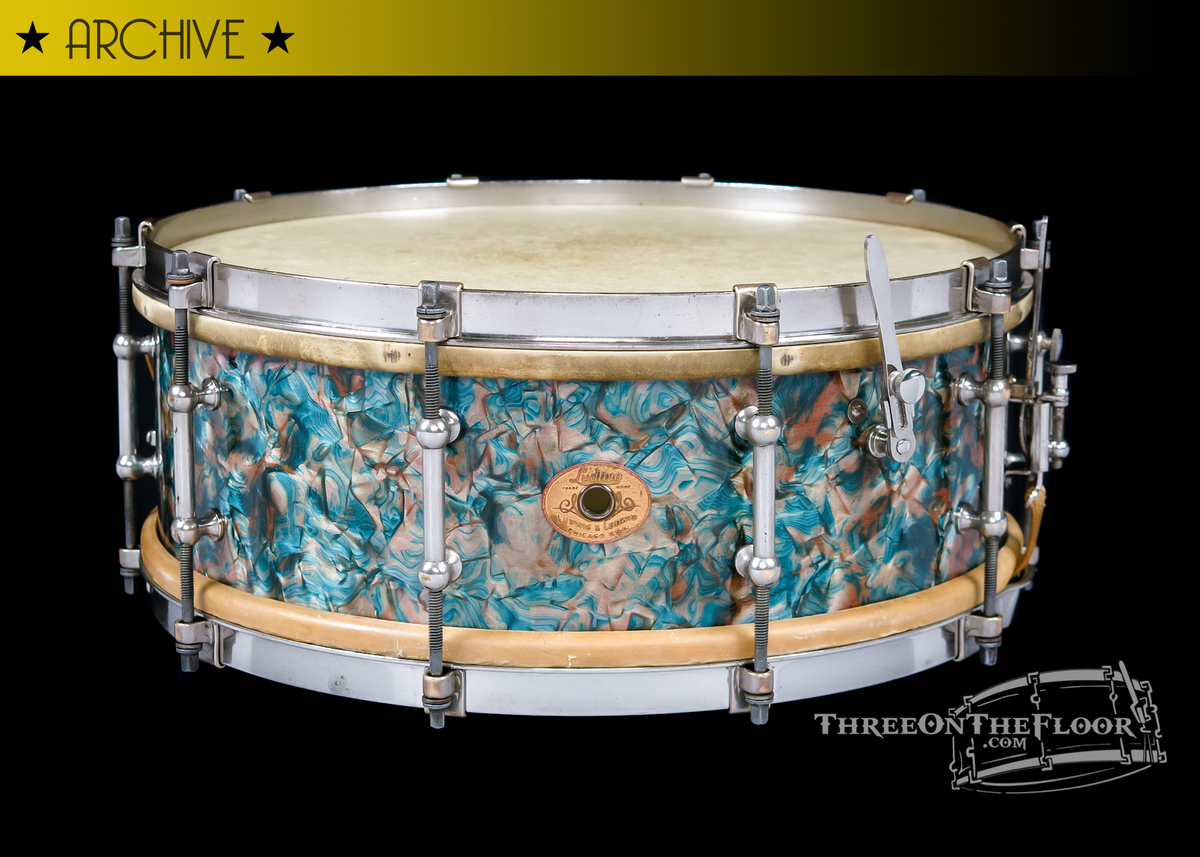
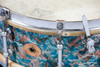
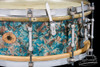
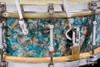
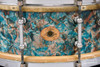
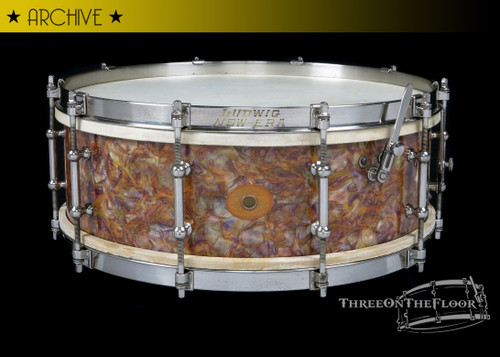
1929-1930 Ludwig Standard-Sensitive Model Rainbow Pearl / Peacock II Snare : 5 x 14
$0.00
1929-1930 Ludwig Standard-Sensitive Model Snare
Size : 5 x 14
Finish : Rainbow Pearl / Peacock II
Ludwig introduced an array of newly designed snare drums in 1929. Amongst these was the Standard-Sensitive model. This particular drum took the ‘standard’ snare strainer system that was familiar to players and introduced a top batter side snare assembly. These additional snares ran across the top head which created ample sensitivity and response from the drum when played lightly. This model was advertised alongside the NewEra-Sensitive, which featured all internal snares systems on top and bottom, and the Super-Sensitive, which featured the extended snare resonant side system along with the internal batter side system. As stated in the 1929 flyer:
“This drum has the same top inside snares as the other LUDWIG SENSITIVE drums, but it is designed for the drummer who wishes to save a little money. First class in every way, but it hasn’t the advantageous features of the snare interchange of the Super-Ludwig extended individual snare control nor the inside bottom snares. You will find that this drum is an unusual value.” Like many of the wood model drums of this era, these shells were built of solid bent mahogany with reinforcement rings and factory painted white interiors. The Standard-Sensitive model did not prove to be a hot seller during this time and was shortly discontinued around 1930.
This drum was acquired from a collector in the New Jersey area. Like many of these super sensitive models, it was received with the entire batter side snare assembly completely missing. Strange enough, the drum was also equipped with a P338 strainer. These strainers were used on higher end model snares prior to the introduction of the ‘Professional’, or later known as the ‘Timepiece’ strainer, in 1929. At this time, the P338 strainers were moved to the standard strainer option for the lower line drums, such as the Pioneer model. In addition, the resonant side hoop is completely free of any engraving. Typically, this model would have seen “Standard Sensitive” engraved on the resonant side hoop. Considering how these hoops seem to be correct to the time, production and condition of the drum, it is possible that this drum was of an early 1929 production. This could be explained as either a production drum prior to the engraving of the hoops or simply that this drum is an anomaly and didn’t include engraved hoops. Luckily, correct strainer and assembly parts were sourced. The drum has been equipped with vintage calf slunk heads and gut snare strands to bring this snare back to its original cataloged state. As of this writing, this is the only known 1929 Standard-Sensitive snare in the Peacock / Rainbow wrap to unearth.
One of the highly debating and confusing features of this drum is the finish. Often referred to as “Peacock Pearl” wrap, this drum is equipped with the Leedy cataloged “Rainbow Pearl” wrap. It is true that Ludwig never had an official Rainbow Pearl finish, however we do see many examples during the 1920s and 1930s of wraps being interchanged between companies. In 1932, Ludwig issued a catalog that displays a Lavender Pearl outfit listed as Rainbow Pearl. This is slightly confusing as directly under the ‘Rainbow Pearl Outfit’ title, is describes the outfit as consisting of a Lavender Pearl bass drum and Lavender Pearl snare. That said, there are distinct difference between rainbow and peacock finishes. Mike Curotto has distinguished these differences in Rob Cook’s Ludwig book on page 153, titling this variation to the wrap, Peacock II. As seen in the comparison photos included, the Rainbow Pearl wrap has sections of the wrap that are translucent, allowing some of the mahogany colors of the shell to come through the wrap. The Peacock also tends to be more of a standard pearl pattern while the Rainbow has tight contour lines simulating a topography map. In addition, the Rainbow pearl wraps held their colors better than the Peacock, which always seem to have a substantial amount of fading.
Related products
Quick view
 Quick view
 Quick view
 Quick view